
When upgrading older homes, one of the most effective ways to improve comfort and energy performance is by applying external wall insulation (EWI). Unlike internal insulation, which reduces room sizes and can leave cold masonry behind the insulation layer, external insulation places the thermal envelope on the outside of the house. This means the existing blockwork or stonework becomes part of the warm interior structure, helping the building stay naturally stable in temperature. Many homeowners hear terms like “breathable insulation” and “thermal mass” but aren’t sure how they relate; in practice, they work together to make the home warmer, drier and more energy efficient.
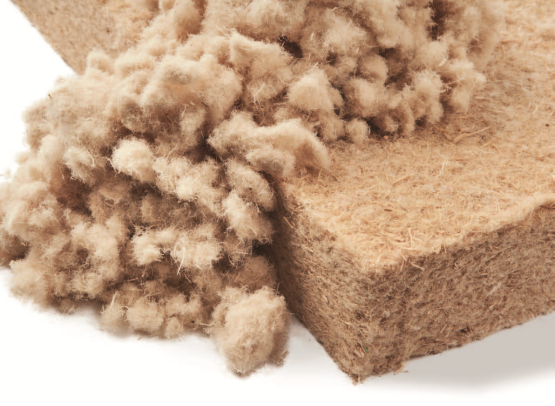
Breathable insulation systems—such as mineral wool or wood-fibre paired with vapour-open renders—allow moisture vapour to move outward through the wall while still protecting the building from rain. This helps the masonry stay dry, and dry masonry performs far better than damp masonry in terms of both insulation and thermal mass. When the wall is dry and kept within the insulated envelope, it can absorb, store and release heat slowly, reducing temperature swings inside the home. The result is a house that feels warmer in winter, cooler in summer, and significantly more comfortable to live in.
✅ 1. What “thermal mass” actually means
Thermal mass is the ability of a material (typically masonry like block, stone, or concrete) to absorb, store, and slowly release heat.
- In winter: the wall absorbs heat from inside and releases it slowly, smoothing out temperature swings.
- In summer: the wall absorbs daytime heat and releases it later at night, helping keep the house cool.
For the thermal mass to work properly, the masonry must be on the inside of the insulation — which is exactly what happens with external insulation.
✅ 2. What makes insulation “breathable”
A “breathable” system simply means:
- Water vapour can migrate outward through the wall.
- But water droplets and rain can’t get in.
This is typical of mineral wool EWI, wood-fibre EWI, and lime–silicate render systems.
Breathability is about moisture behaviour — not heat.
But moisture and heat influence each other indirectly. You will hear about “dew points” which is the point in the structure at which the warm moist air meets a colder surface causing the water vapour to condense out of the air as moisture.
✅ 3. The link: moisture content affects thermal mass
Here’s the tricky connection:
Moist walls = poor thermal mass + poor insulation.
If masonry is damp, two things happen:
- Its thermal mass performance is reduced because water conducts heat too quickly.
- The wall loses heat far faster.
So what does breathable external insulation do?
It keeps the masonry warm and dry.
Because the insulation and render allow vapour to escape outward, the wall gradually dries out.
A dry wall has:
- Higher effective thermal mass
- Higher thermal resistance
- Less heat loss
- Better comfort
So the relationship is not: “Breathability improves thermal mass.”
It is: Breathability keeps the wall dry → a dry wall has better thermal mass + better thermal performance.
✅ 4. Why external insulation (breathable or not) boosts thermal mass
All external insulation systems (including EPS) have one big advantage:
They put the existing blockwork / stone inside the insulated envelope.
That means:
- The masonry can stabilise indoor temperatures
- Thermal mass becomes part of your heating system.
- You avoid the “thin cold wall” effect found in internal insulation
Breathability just enhances this by ensuring the wall doesn’t get damp.
If you want the simplest one-line explanation:
External insulation preserves your existing thermal mass, and breathable systems keep it dry enough to work properly.
External insulation keeps the original block or stone walls on the inside of the insulated envelope, which means the masonry can act as thermal mass—absorbing heat, holding it, and releasing it slowly. This helps stabilise indoor temperatures and reduces heating demand. However, thermal mass only works well when the masonry is dry, because water conducts heat much faster than air. If the wall is damp, it loses heat rapidly and cannot store heat effectively.
Breathable insulation systems allow water vapour (not liquid water) to move outward through the wall. This gradually dries the masonry and keeps it dry over time. A dry wall has better thermal resistance and retains heat more effectively, allowing the thermal mass to perform as intended. In short: external insulation gives the masonry a thermal role, and breathability ensures the masonry stays dry enough to do that job properly.