
Why Battery Power Is Changing Home Renovation Projects
For decades, the soundtrack of a renovation project was predictable: grinders screaming, radios crackling, and somewhere outside, a petrol or diesel generator rattling away in the background. On many projects, that generator became accepted as “just part of the job.”
But construction is changing.
Clients are more conscious of sustainability. Residential neighbourhoods are less tolerant of noise. Fuel prices remain volatile. Tradespeople increasingly rely on sensitive electronics, cordless charging stations, laser equipment, and cleaner indoor working conditions.
That’s where battery power systems like the GOAT 5kW battery generator come into their own.
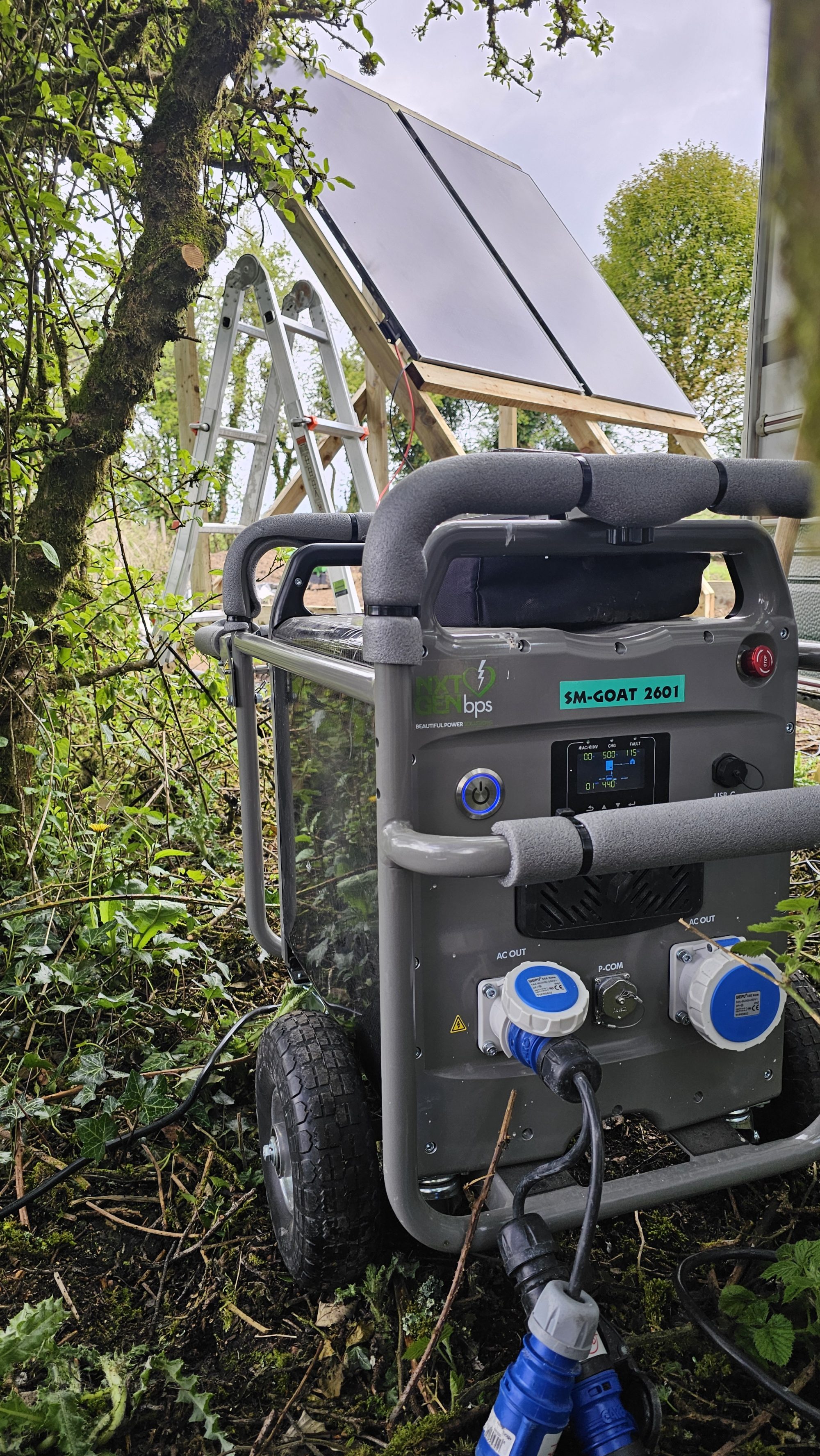
The NXTGENbps GOAT 5kW / 4.8kWh Battery Generator represents a very different approach to temporary site power. Instead of relying on a combustion engine continuously burning fuel, the GOAT stores electricity in a lithium battery system and delivers silent, emission-free power on demand.
For home renovation projects in particular, the difference is significant.
The Traditional 5kW Site Generator
A typical 5kW petrol or diesel site generator has remained largely unchanged for years:
- Internal combustion engine
- Constant engine noise
- Continuous fuel consumption
- Exhaust emissions
- Regular servicing requirements
- Oil, filters, plugs, belts, and mechanical wear
They are proven, available, and capable of running high-demand tools continuously provided there is fuel available.
But they also bring compromises that become especially noticeable on residential renovation projects.
On a rural commercial site, generator noise might not matter much.
On a domestic extension in a quiet housing estate at 8am on a Saturday morning, it matters a lot.
The GOAT Battery Generator Approach
The GOAT takes a fundamentally different approach.
Instead of generating electricity by running an engine continuously, it stores energy in a 4.8kWh lithium battery pack and delivers up to 5kW continuous power with 7.5kW peak output.
The unit is designed for professional environments including construction, events, film production, and mobile operations. Key features include:
- 5kW continuous output
- 7.5kW surge capacity
- LiFePO4 battery technology
- Silent operation
- Zero on-site emissions
- Solar charging compatibility
- EV charger compatibility
- IP67 weather protection
- Ability to charge while operating
- Expandable battery capacity systems
For renovators, the biggest shift is not technical.
It’s operational.
1. Noise: The Biggest Immediate Difference
Anyone who has worked around a conventional generator for a full day understands the fatigue factor.
Even “quiet” diesel generators create:
- Constant background vibration
- Low-frequency engine drone
- Noise transfer through neighbouring properties
- Communication difficulties on site
Battery generators change the atmosphere of a renovation project immediately.
With the GOAT, there is no idling engine running all day simply to maintain available power.
That creates major advantages for domestic work:
Better Client Experience
Clients living in occupied homes during renovations already deal with disruption. Eliminating generator noise reduces stress considerably.
Conversations become easier. Meetings with homeowners can happen without shouting over machinery.
Better Neighbour Relations
Residential projects succeed or fail partly on neighbour tolerance.
A silent power source helps reduce complaints about:
- Early starts
- Weekend work
- Long working days
- Outdoor operations
Better Working Environment
Trades can communicate properly without engine noise constantly in the background.
For detail work like:
- cabinetry
- tiling
- decorating
- electrical finishing
- snagging
…the quieter environment genuinely improves concentration and workflow.
2. Indoor Use Changes Everything
One of the major limitations of petrol and diesel generators is obvious:
You cannot safely run them indoors.
Exhaust fumes create serious health risks, including carbon monoxide exposure.
That means:
- generators stay outside,
- cables snake through windows and doors,
- access routes become cluttered,
- weather protection becomes necessary.
The GOAT operates without combustion emissions.
For renovation projects this opens up completely different deployment options.
Practical Advantages Indoors
The unit can safely power:
- interior fit-out works
- kitchens under renovation
- attic conversions
- basements
- enclosed extensions
- internal finishing trades
without introducing exhaust fumes into the workspace.
This is particularly valuable in:
- occupied homes,
- airtight modern retrofits,
- deep renovation projects,
- protected structures with limited ventilation.
3. Fuel Logistics Disappear
Traditional generators create a constant fuel management cycle.
Someone always needs to:
- collect diesel or petrol,
- transport fuel safely,
- refill generators,
- manage spills,
- store fuel securely,
- track running costs.
On renovation projects, this becomes a hidden inefficiency.
Battery systems eliminate nearly all of that operational friction.
The GOAT can recharge via:
- standard mains power,
- EV charging systems,
- solar input systems.
That changes the workflow dramatically.
Instead of daily fuel runs, charging becomes part of normal site setup.
For contractors managing multiple smaller residential projects, that simplification matters.
4. Real Cost Comparison
At first glance, many contractors assume battery systems are expensive compared to standard generators.
The upfront purchase price often is higher.
But operational cost is where the equation changes.
Traditional Generator Costs
A petrol or diesel generator continuously incurs:
- fuel costs,
- servicing,
- downtime,
- oil changes,
- filter replacements,
- mechanical wear,
- engine failures,
- transportation of fuel.
Additionally, generators often run inefficiently under low loads.
A generator idling to charge a few batteries or power low-demand tools still burns fuel.
GOAT Operating Costs
Battery systems eliminate:
- fuel consumption,
- engine servicing,
- oil changes,
- many moving mechanical parts.
Electric charging costs are significantly lower than fossil fuel operation in most cases.
Over long-term residential renovation use, especially on intermittent-demand projects, the operating cost difference becomes substantial.
5. Power Quality Matters More Than Ever
Modern renovation sites use increasingly sensitive equipment:
- laser levels
- testing equipment
- chargers
- laptops
- smart diagnostics
- LED lighting
- control systems
Traditional generators can produce unstable power output under fluctuating loads.
The GOAT uses inverter-based battery delivery with pure sine wave output designed for sensitive electronics.
That cleaner power supply helps protect:
- chargers,
- electronics,
- monitoring systems,
- precision equipment.
This becomes increasingly important as construction becomes more digital.
6. Sustainability Is No Longer Optional
Homeowners are becoming far more environmentally conscious.
Clients investing in:
- retrofit upgrades,
- insulation,
- heat pumps,
- airtightness,
- renewable technologies
often question why a diesel generator is sitting outside their house all day.
Battery generators align much better with modern renovation values.
The GOAT produces:
- zero on-site emissions,
- no fuel spills,
- no exhaust fumes,
- dramatically reduced noise pollution.
For contractors positioning themselves as progressive renovation specialists, this matters commercially as well as environmentally.
The site setup itself becomes part of the brand experience.
7. Where Traditional Generators Still Win
Battery systems are not magic.
There are still situations where traditional generators remain the better option.
Continuous Heavy-Demand Applications
If a site requires:
- large welders,
- heavy compressors,
- constant high-load equipment,
- long-duration continuous power,
a diesel generator may still be more practical.
Extremely Remote Projects
Where no charging infrastructure exists whatsoever, fuel generators still offer unmatched runtime flexibility.
Very Long Multi-Day Heavy Use
Although the GOAT supports expansion packs and charging while operating, continuous industrial-scale consumption may favour diesel systems.
Where the GOAT Excels
For residential renovation projects specifically, the GOAT is exceptionally well suited to:
- extensions
- retrofit projects
- occupied home renovations
- kitchen refurbishments
- attic conversions
- snagging works
- finishing trades
- urban residential sites
- environmentally conscious projects
- indoor temporary power setups
These are exactly the environments where silence, cleanliness, portability, and reduced disruption provide the greatest value.
The Future of Residential Site Power
Battery generators are not replacing every diesel generator tomorrow.
But on domestic renovation projects, the shift has clearly started.
The advantages are increasingly difficult to ignore:
- quieter sites,
- cleaner operation,
- lower running costs,
- improved client experience,
- reduced environmental impact,
- safer indoor operation,
- modern power quality.
The GOAT represents more than just an alternative generator.
It represents a different philosophy of how temporary site power should work on modern renovation projects.
And once teams experience a quiet site without engine noise constantly running in the background, it becomes surprisingly difficult to go back.
